Peptide Purity Overview 98%, 99% & Research-grade Explained Prg
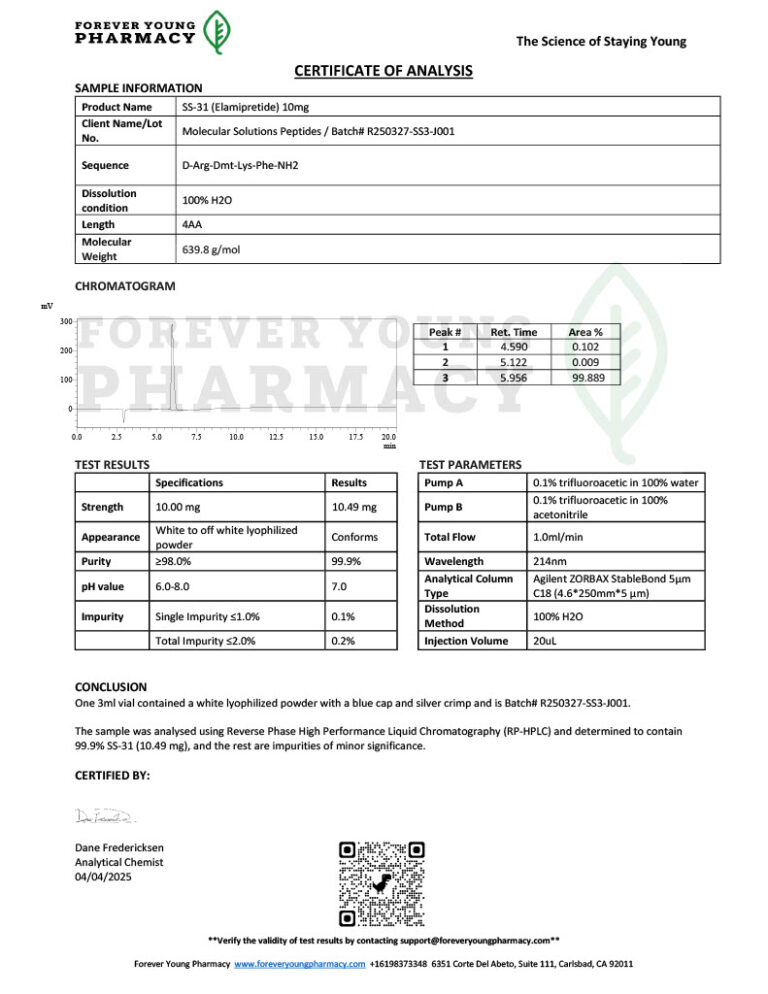
Peptide Purity Testing: Just How Researchers Confirm Top Quality We utilize High Performance Liquid Chromatography to make certain that the energetic material direct-Sarms.com focus is ≥ 99% which there are no international contaminations. Creative Peptides is an around the world acknowledged peptide company. Our teams are made up of professional experts in peptides. Relied on by biotech leaders worldwide for over 45+ years of providing top quality, quickly and scalable artificial biology options. Levels of airborne fragment pollutants are figured out by keeping an eye on the visibility of variety of fragments to comply with federal basic 209E which requires 1 cfm for airborne particulate sanitation. Met One Fragment Counter version 237A is utilized to identify the fragment counts in the lab.
Chromatography Column
Is 95% pureness great for peptides?
Peptides with an 85% pureness level or higher are typically utilized in enzyme assays or organic task studies. Peptides with pureness more than 95% are outstanding for quantitative evaluation.
Peptide Purity And Quantitation Screening
Unrefined peptides are suitable for applications where pureness isn't critical, such as antibody production or first screening assays where the target peptide simply requires to be existing, not leading. Mass spectrometry determines the molecular weight of a compound with severe precision. For peptides, one of the most typical techniques are electrospray ionization (ESI-MS) and matrix-assisted laser desorption/ionization time-of-flight (MALDI-TOF). HPLC separates a blend into its private components based on exactly how each particle interacts with a specially developed column. The liquified peptide example is infused right into a stream of fluid solvent (the mobile phase) that moves via a tube packed with little fragments (the stationary stage). Different molecules "stick" to those particles with various staminas, so they take a trip with the column at various speeds.- Even trace amounts can create pyrogenic (fever-inducing) actions in humans.
- A peptide missing out on one amino acid might show up 99% pure on HPLC, but would certainly be 0% the preferred peptide.
- Janoshik is frequently taken into consideration the gold requirement in the peptide study community, with proven COAs and well established reputation.
- For a deeper identity-focused description, see Mass Spectrometry Peptide Verification.